
Total Compensation
Total compensation refers to the complete package of financial and non-financial benefits an employee receives from their employer in exchange for their work. It includes more than just the base salary or hourly wage and takes into account additional elements that contribute to the overall value of the job.
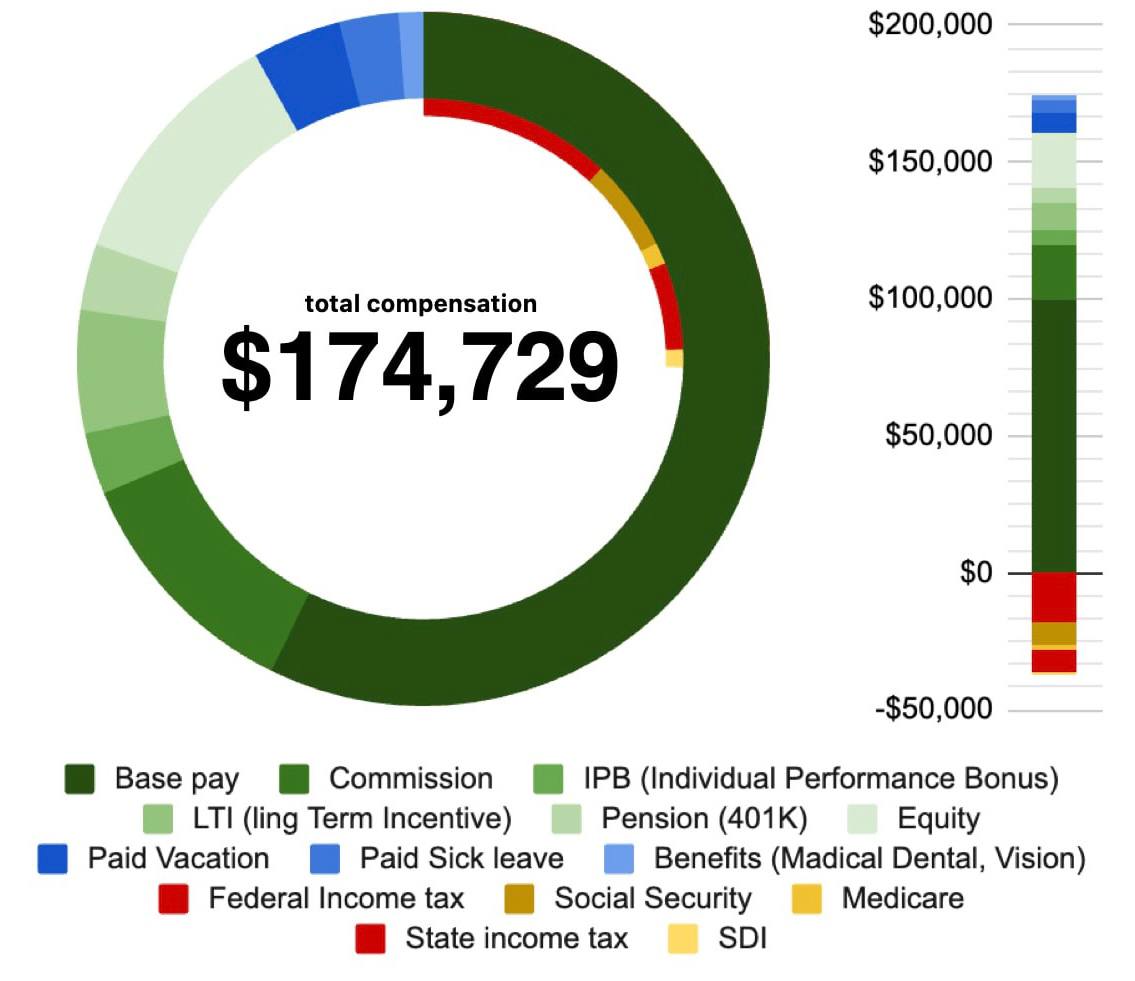
Total compensation (also referred to as total reward) typically includes:
Base Pay
- Salary or hourly wage: The fixed amount paid to the employee for their work.
Bonuses and Short term incentives
- Commission: Pay based on sales or other measurable achievements.
- Individual Performance bonuses: Extra pay based on individual performance.
- Group Performance bonuses: extra pay based on performance of a group of employees or of a whole company.
Long Term Incentives
- Stock Options
- Restricted Stock Units (RSUs)
- Performance Stock Units (PSUs)
- Stock Appreciation Rights (SARs)
- other deferred compensation plans
Benefits
- Paid time off (PTO): Vacation, Sick leave, and holidays.
- Health insurance: Medical, Dental, and Vision coverage.
- Retirement plans: 401(k) matches, pensions, or other retirement contributions.
- Life and disability insurance: Coverage provided by the employer.
Other Intangible Benefits
- Wellness programs: Gym memberships, mental health services, etc.
- Tuition reimbursement: Assistance for education or training.
- Transportation: Commuter benefits or company vehicles.
- Meal allowances: Free or subsidized meals.
When evaluating a job offer or assessing your current role, considering total compensation provides a more comprehensive picture of the value you receive for your work.